Why Demand Is the Versatile Display Font You Didn’t Know You Needed
Choosing the right typeface is rarely just about aesthetics; it is a strategic decision that influences readability, brand perception, and overall user experience. Among the myriad of options available to designers, marketers, and content creators, Demand stands out as a clean, adaptable display font that deserves serious consideration. Whether you are designing a high-impact landing page, crafting a professional presentation, or editing a blog post, having a reliable tool in your arsenal can make the difference between a cluttered design and a polished one.
Many people overlook the nuances of font selection, assuming that any bold sans-serif will do. However, this approach often leads to generic designs that fail to capture attention or convey the intended message effectively. Demand offers a unique balance of modern minimalism and structural integrity, making it an excellent asset for a wide range of projects. By understanding its strengths and avoiding common pitfalls, you can leverage this font to enhance your creations significantly.
Understanding the Core Appeal of Demand
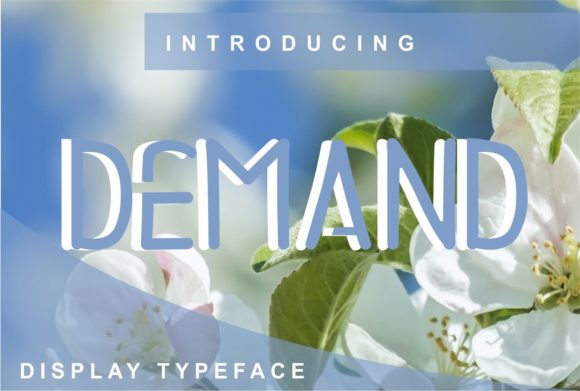
At its heart, Demand is designed to be unobtrusive yet impactful. It belongs to the category of display fonts, which means it is optimized for use at larger sizes where legibility and character shine. Unlike text fonts that prioritize compactness and screen reading efficiency over long periods, display fonts like Demand are meant to grab attention quickly. Its clean lines and geometric precision give it a contemporary feel that aligns well with current design trends favoring clarity and simplicity.
The adaptability of Demand is perhaps its most valuable trait. It does not scream for attention in a chaotic way; instead, it provides a solid foundation upon which other design elements can rest. This makes it particularly useful for headers, titles, and key messaging points where you want the viewer’s eye to land immediately. For entrepreneurs and small business owners, this means your core value proposition can be communicated clearly without visual noise.
Beyond the Surface: What Makes It Different?
While many fonts claim to be "clean," few manage to maintain such consistency across different weights and styles. Demand achieves this through careful kerning and spacing adjustments that ensure each letterform interacts harmoniously with its neighbors. This attention to detail prevents the awkward gaps or collisions that can plague lesser-designed typefaces. When used correctly, this results in a smoother reading experience, even when scanning large blocks of headline text.
Furthermore, the neutral tone of Demand allows it to blend seamlessly with various color palettes and imagery. Whether you are working on a corporate identity for a tech startup or a creative portfolio for a freelance photographer, this font adapts to the context without imposing a rigid stylistic constraint. This flexibility is crucial for professionals who need a versatile toolkit rather than a niche solution.
Common Mistakes When Using Display Fonts
Even with a high-quality font like Demand, poor implementation can undermine its potential. One of the most frequent errors is overusing display fonts in body copy. Because Demand is engineered for impact, using it for paragraphs of text can lead to reader fatigue. The human eye struggles to process large amounts of information presented in a heavy, geometric typeface. Instead, reserve Demand for headlines, subheadings, and short call-to-action buttons. Pair it with a lighter, more readable sans-serif or serif font for longer passages to create a balanced hierarchy.
Another critical mistake involves ignoring contrast. A common misconception is that a bold font needs a bold background to stand out. In reality, high contrast between the text color and the background is what drives legibility. If you place white Demand text on a light gray background, the message becomes muddy and difficult to read. Always test your font choices against their intended backgrounds. Dark text on light backgrounds or vice versa ensures maximum accessibility and visual clarity.
- Misjudging Scale: Display fonts lose their character if scaled too small. Ensure that Demand remains legible at the smallest size you plan to use it.
- Poor Pairing: Combining two competing display fonts creates visual chaos. Stick to pairing Demand with simpler, complementary typefaces.
- Neglecting White Space: Bold fonts require room to breathe. Crowding Demand text against other elements diminishes its impact.
Evaluating Licensing and Usage Rights
Before downloading or purchasing any font, including Demand, it is essential to understand the licensing terms. Many users assume that a free download grants unlimited commercial rights, which is often incorrect. Some licenses restrict usage to personal projects only, while others may require attribution or limit the number of impressions or devices. Failing to check these details can lead to legal issues and unexpected costs down the line.
For freelancers and agencies, verifying the scope of the license is non-negotiable. If you plan to use Demand in client work, ensure the license covers commercial distribution. Some fonts offer separate licenses for web, print, and app usage. Understanding these distinctions helps you avoid infringement and ensures that your project remains compliant from start to finish. Always keep records of your licenses and receipts for future reference.
Cost vs. Value Considerations
While budget constraints are real, viewing font acquisition solely through the lens of cost can be misleading. A cheap or free font might seem like a good deal initially, but if it lacks the versatility or quality of Demand, you may end up spending more time tweaking it or replacing it later. Investing in a high-quality, adaptable font can save time and improve the final output’s professionalism. Evaluate the font based on how many projects it can serve and how well it elevates your brand’s visual identity.
Practical Tips for Maximizing Impact
To get the most out of Demand, experiment with its weight variations. Using a lighter weight for secondary information can create a subtle hierarchy without introducing a new font family. This technique maintains visual cohesion while guiding the reader’s eye through the content logically. Additionally, consider tracking (letter-spacing) adjustments. Slightly increasing the space between letters in all-caps headings can enhance readability and add a touch of elegance.
When integrating Demand into digital designs, pay attention to rendering on different screens. High-resolution displays render fonts beautifully, but lower-end devices may struggle with fine details. Test your designs on multiple devices to ensure that the clean lines of Demand remain crisp and clear. This proactive approach prevents pixelation or blurriness that could detract from your message.
- Define Your Hierarchy: Use Demand primarily for H1 and H2 tags to establish clear structure.
- Limit Variations: Stick to two or three weights of Demand to maintain consistency.
- Test Accessibility: Use tools to check contrast ratios and ensure compliance with WCAG guidelines.
- Contextualize: Ensure the font matches the tone of your content—Demand works well for modern, direct, and confident messaging.
Conclusion
Demand is more than just another font in your library; it is a tool that, when used wisely, can elevate the quality of your communication. By avoiding common mistakes such as overuse, poor pairing, and neglecting licensing, you can harness its full potential. Remember that good design is not about adding more elements, but about choosing the right ones and placing them thoughtfully. With Demand’s clean aesthetic and adaptability, you have a powerful ally in creating designs that are both visually appealing and functionally effective. Take the time to explore its capabilities, respect its limitations, and let it contribute to the success of your next project.