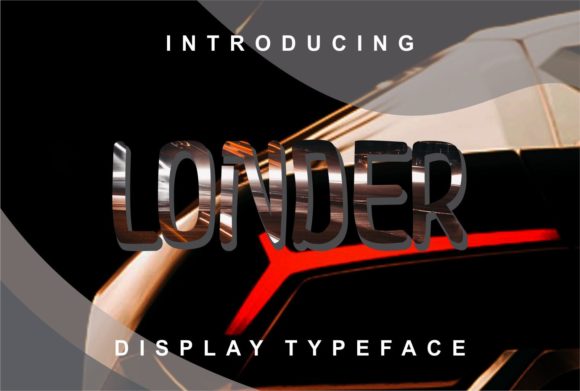
Londer: A Strategic Approach to Clean Display Typography
In the landscape of visual communication, typography is rarely just about readability; it is a primary driver of brand perception and user experience. For entrepreneurs, marketers, and creative professionals aged 20 to 50, the choice of typeface is a strategic decision that influences how a message is received before a single word is read. Londer emerges as a sophisticated solution in this domain—a clean, adaptable display font designed to bring clarity and elegance to high-impact materials.
This article explores the practical applications of Londer, moving beyond aesthetic appreciation to examine how its structural integrity supports better planning, positioning, and long-term branding outcomes. Whether you are designing a flyer for a local event or curating the visual identity for a digital publisher, understanding the nuances of Londer can refine your workflow and elevate your output.
The Architecture of Clarity: Why Londer Works
At its core, Londer is defined by its cleanliness. In design theory, "clean" does not merely mean simple; it refers to a lack of visual noise that allows the content to take precedence. This makes Londer particularly valuable for professionals who need to communicate complex ideas without overwhelming their audience. The font’s adaptability stems from its balanced proportions and neutral yet distinctive character shapes, which allow it to function effectively across various contexts.
For small business owners and freelancers, the challenge often lies in creating assets that look professional without requiring extensive graphic design resources. Londer addresses this by providing a ready-made sense of polish. When used correctly, it reduces the cognitive load on the viewer, enabling faster comprehension of key messages. This is crucial in marketing materials where attention spans are short and the goal is immediate engagement.
Furthermore, the font’s structural consistency ensures that it scales well. Whether rendered large on a poster or smaller on a business card, Londer maintains its legibility and aesthetic appeal. This reliability is essential for maintaining brand coherence across different media channels, a key component of effective operational planning for growing businesses.
Strategic Use Cases for Print and Digital Assets
While Londer is versatile, its strengths are most evident in specific scenarios where display typography plays a dominant role. Display fonts are intended to be seen rather than read extensively, making them ideal for headlines, titles, and short phrases. Here is how Londer can be strategically deployed:
Event Marketing and Posters
For educators, community organizers, and event planners, posters are still a vital tool for local outreach. Londer’s bold presence can command attention in crowded physical spaces. Its clean lines ensure that the date, time, and location remain distinct even from a distance. By using Londer for the main headline and pairing it with a highly readable body font, designers can create a hierarchy that guides the eye naturally through the information.
Flyers and Promotional Materials
Small business owners often rely on flyers to drive foot traffic or promote services. The risk here is clutter. A busy design can dilute the call to action. Londer helps mitigate this by offering a strong typographic anchor. When used for key selling points—such as "Sale," "New Launch," or "Workshop"—it adds weight and importance to these messages without requiring additional graphical elements. This approach aligns with minimalist design principles, which have been shown to increase trust and perceived value among consumers.
Digital Headers and Blog Features
Bloggers and publishers face the unique challenge of balancing web performance with visual impact. While Londer is primarily a display font, its clean aesthetic translates well to digital headers if used sparingly. It can serve as an alternative to generic sans-serifs, giving a blog or online publication a distinct personality. However, care must be taken to ensure that screen resolution and loading times do not compromise the font’s crisp edges.
Decision-Making Framework: When to Choose Londer
Selecting a typeface should not be a random act of creativity but a deliberate decision based on project goals. Before incorporating Londer into your design process, consider the following factors:
- Audience Expectations: Does your target demographic respond to modern, clean aesthetics? Londer appeals to audiences who value professionalism and clarity. It may be less suitable for brands aiming for a retro, handcrafted, or highly ornamental feel.
- Message Tone: Is the tone serious, informative, or elegant? Londer excels in contexts where authority and sophistication are desired. It may clash with humorous or chaotic themes unless used ironically.
- Volume of Text: Remember that Londer is a display font. It is not designed for long-form body text. Using it for paragraphs will hinder readability and frustrate users. Reserve it for headings, pull quotes, and short labels.
- Brand Consistency: Does Londer align with your existing brand guidelines? If your brand uses geometric or humanist sans-serifs, Londer might integrate seamlessly. If your brand relies on serif fonts for tradition, Londer could introduce a jarring contrast.
Practical Tips for Implementation
To maximize the effectiveness of Londer, practitioners should adopt a disciplined approach to its usage. Here are several strategies to enhance your designs:
- Pairing is Key: Never let Londer stand alone in a layout. Pair it with a complementary body font that offers high readability. A neutral sans-serif or a classic serif can provide the necessary contrast to highlight Londer’s display qualities. This creates a visual rhythm that keeps the reader engaged.
- Whitespace Management: Display fonts thrive in environments with ample whitespace. Avoid cramming text tightly around Londer headlines. Allow the letters to breathe; this enhances the perception of luxury and confidence in your brand.
- Scale Variation: Experiment with extreme sizes. Londer looks stunning at very large scales on posters, but it can also work well as a subtle watermark or background element when scaled down and given low opacity. This technique adds depth without distracting from the primary content.
- Color Psychology: The color of the text interacts with the font’s shape. Dark, solid colors like black or deep navy reinforce Londer’s authoritative nature. Lighter or pastel colors can soften its impact, making it more approachable for lifestyle or wellness brands.
Risks and Mitigation Strategies
Even the best tools can be misused. There are inherent risks in relying heavily on a single typeface, particularly one as stylistically distinct as Londer. One common pitfall is overuse. If every headline in a document or website uses Londer, the design loses its hierarchy, and the font becomes visually monotonous. To avoid this, limit Londer to primary and secondary headings only.
Another risk is licensing confusion. As a professional resource, it is critical to verify the license terms before using Londer in commercial projects. Some fonts require separate licenses for print and web use. Failing to secure the correct permissions can lead to legal issues and financial penalties. Always consult the official source or authorized distributor to ensure compliance.
Additionally, consider accessibility. While Londer is clean, some display fonts can have low contrast between characters (e.g., 'I' and 'l'). Test your designs for legibility, especially for users with visual impairments. If Londer is used for critical information, ensure sufficient size and contrast ratios are maintained to meet Web Content Accessibility Guidelines (WCAG).
Long-Term Value in Brand Building
Investing time in selecting the right typography pays dividends in brand recognition. Londer’s adaptability allows it to grow with your project. A startup might use it for a sleek, modern logo, while a mature company might use it for annual report covers or executive summaries. Its timeless quality means that designs created today will likely remain relevant years from now, reducing the need for frequent rebranding due to outdated aesthetics.
For creators and hobbyists, mastering the use of fonts like Londer is a step toward professional-grade output. It demonstrates an understanding of design principles that goes beyond mere decoration. By focusing on clarity, hierarchy, and intentionality, you create materials that not only look good but also perform better in achieving their communicative goals.
Conclusion: Intentional Design for Better Results
Londer is more than just a pretty font; it is a tool for clear communication. Its clean lines and adaptable nature make it a valuable asset for anyone looking to improve their visual storytelling. By approaching its use with strategy and consideration, you can enhance the impact of your posters, flyers, and digital assets.
Remember that good design is invisible—it serves the message, not the other way around. Let Londer support your goals by providing structure and elegance, allowing your content to shine. Explore its possibilities, test its limits, and integrate it thoughtfully into your workflow. The result will be designs that are not only visually appealing but also effective in driving engagement and achieving your objectives.
As you continue to refine your craft, keep experimenting with Londer in new contexts. Whether you are launching a product, teaching a class, or sharing your expertise online, the right typographic choices can make a significant difference. Embrace the adaptability of Londer, and let it help you create work that stands out in a crowded marketplace.